Fox Walk
Toms River, New Jersey

[First things:
During the Civil War, the North, starved of cotton, bandaged their wounded with sphagnum moss. I learned this on a walk through a stand of Atlantic white cedars; the speaker, a stocky former Boy Scout, couldn’t make it ten steps before stopping and orating upon the marvels of one shrub or another. We were on the grounds of the Save Barnegat Bay Ecocenter, tracing the course of Long Swamp Creek, which empties into Toms River, which empties into the center’s eponymous bay. Sphagnum and other such good, greening things abounded.
The moss worked—and more. Recovering Union soldiers warded off infection at rates that dwarfed those of their Confederate counterparts. The reason wasn’t a mystery, only forgotten: sphagnum moss increased the acidity of its surroundings. Long before the Civil War, sailors kegged the Pine Barrens’ purified cedar water for transatlantic voyages. We knew moss was good at keeping things clean. We just didn’t know why, didn’t know about pH and the secret, baroque existence of germs, and so we didn’t know how to use that information, drag it out of history and into the besieged present.
I had driven up to the ecocenter to attend a workshop on climate education. My goal was to learn how to get students, adults included, to care. But what sticks with me from my few hours there is how much I had to learn myself. Or, a better word than learn: remember. Once upon a time I thought recycling a Deer Park water bottle did something, that said bottle wasn’t simply loaded onto a ship and sent to Malaysia and added to the plastic mountains there. Once upon a time I saw nature as a place of answers, not just a thing we had ravaged that would survive us in the end. It helps to remember this feeling, remember that things find a way. Things are bad, but a period can’t end that statement, only the next. There needs to be that but.
*
At the start of our walk along Long Swamp Creek, the workshop leader asked for a volunteer. I volunteered. I walked from one oak to another while my peers looked on. My eyes, per the workshop leader’s instructions, were closed. My fingers plugged my ears.
“Okay,” he said, once I’d stopped and unblinded myself and unplugged my ears and returned to the world. “What did that sound like? What could you hear?”
“My heart,” I said. “The blood in my ears.”
“And.”
“And my footsteps,” I said.
“And what were those like?”
“Loud,” I said. “They were loud.”
“That’s what the forest hears,” he said. “That.”
The Lenni Lenape, the original residents of Toms River, fox walked. The technique was this: outside of ball of foot down first, slow roll to heel, repeat; ideally lightly; ideally with feet bare and in a line. “Now try,” the workshop leader said, and I did. And lo and behold: just my heart this time, my pulse slower and quieter than before.
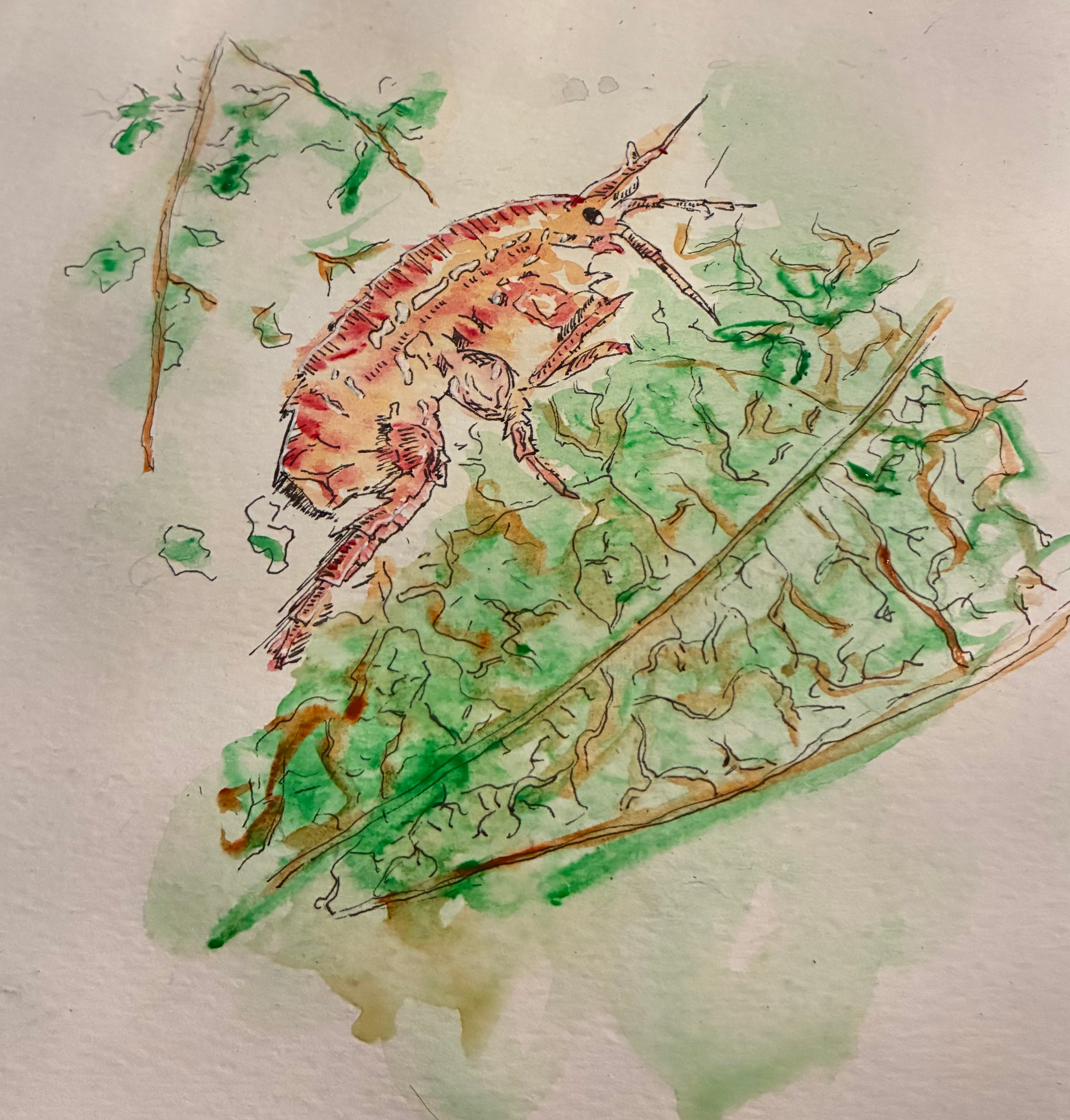
Soon the sun set. Inside, we sifted through creek muck and IDed scuds, bloodworms, damselfly larvae. The more resilient the living species, the worse the water’s state. The news was middling, but we laughed at the scuds’ impressive sexual escapades and went home hopeful.
So how to get folks to care?
Maybe this: attention. Maybe attention is a key to the whole thing, one of a set. Simone Weil calls it the “rarest and purest form of generosity,” and I agree. It takes hours of quiet for the forest to forget you’re there, for the deer to re-emerge and the birds to start singing again. Spend that time. Pay attention. Tell about it.